
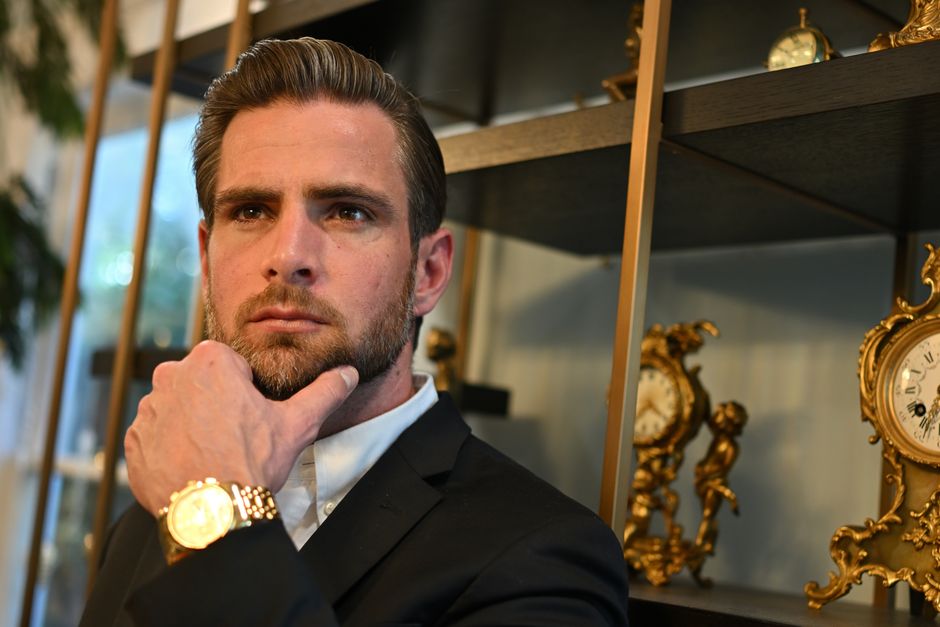
The luxury watch market has emerged as a distinctive alternative asset class, attracting investors seeking tangible holdings beyond traditional equities and bonds. Watch dealer Joram Scher has positioned himself within this niche sector, facilitating transactions involving timepieces valued at several hundred thousand euros—price points that rival or exceed the cost of residential property in many European markets.
Understanding Ultra-Premium Watch Valuations
Luxury watches at the highest end of the market command valuations comparable to €110,000 and beyond, reflecting factors including manufacturing heritage, mechanical complexity, material composition, and provenance. Collectors and investors pursue these acquisitions for reasons spanning historical significance, technical craftsmanship, and investment potential. Certain vintage and contemporary models from established Swiss and German manufacturers have demonstrated consistent appreciation over extended holding periods, attracting portfolio diversification strategies among high-net-worth individuals.
Scher’s work involves navigating the intricate world of ultra-premium timepieces, where authentication, condition assessment, and market positioning prove critical to transaction success. The dealer’s involvement underscores the professionalization of the luxury watch sector, where specialized expertise commands premium value.
Accessible Entry Points for Watch Investors
Despite the astronomical pricing of headline-grabbing acquisitions, Scher emphasizes that investors need not deploy six-figure sums to access comparable mechanical quality and design principles. The dealer identifies what might be termed “life watches”—timepieces offering substantive technical merit, design integrity, and potential appreciation at materially lower price thresholds than their ultra-premium counterparts.
This market segmentation reflects broader patterns within alternative asset classes, where entry-level and mid-market positions provide exposure to the same underlying value drivers as elite-tier holdings. Investors demonstrating patience and expertise can identify watches exhibiting comparable craftsmanship, historical significance, and collectibility at pricing substantially below the rarefied atmosphere of hundred-thousand-euro transactions.
The distinction between stratospheric luxury acquisitions and reasonably priced alternatives within the same category permits portfolio construction strategies accessible to wider investor cohorts while maintaining exposure to mechanical watchmaking as an alternative asset.
Emerging Regulatory and Market Considerations
The expansion of alternative asset classes including luxury goods requires increasing attention from regulatory bodies and financial institutions across Europe. While traditional financial regulation has not extensively addressed watch market transactions, the sector’s growth as an investment vehicle—particularly among institutional and sophisticated individual investors—raises questions regarding valuation transparency, authentication standards, and market integrity.
European financial authorities monitoring alternative asset proliferation may eventually develop frameworks addressing luxury goods transactions, particularly as trading volumes and cross-border activity increase. The absence of standardized valuation methodologies or centralized market infrastructure distinguishes watch investments from regulated securities, though this informality permits flexibility unavailable within traditional financial markets.
As alternative asset classes diversify European investment portfolios, the luxury watch sector exemplifies how tangible, specialized holdings attract capital seeking returns uncorrelated with equities and fixed income. Professionals like Scher facilitate this market evolution, connecting investors with opportunities spanning price ranges and expertise levels.