
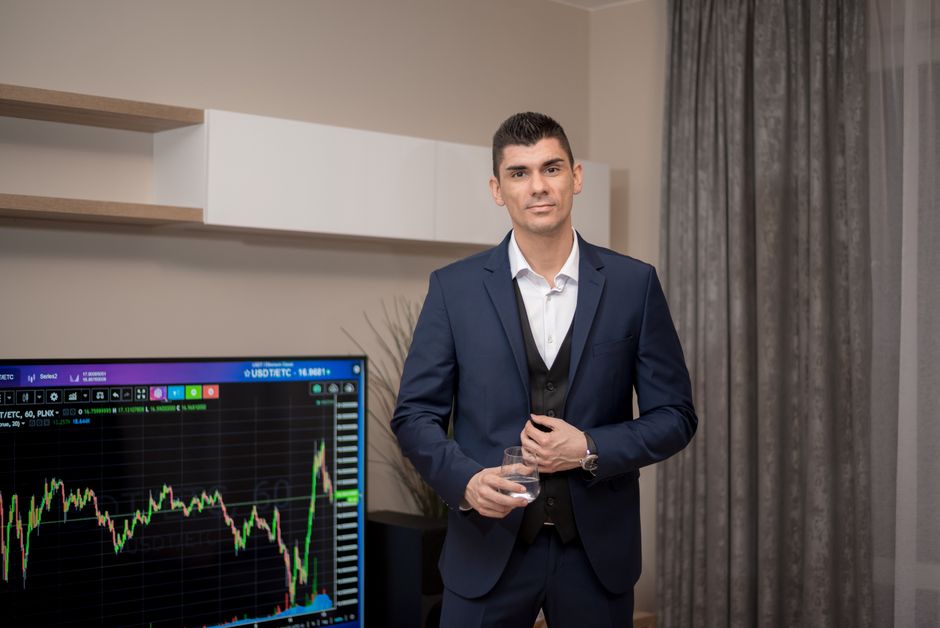
Miraltabank, the Spanish banking institution, hosted a question-and-answer session on 14 October 2026 featuring Victor Mir, head of wealth banking, who outlined strategies for navigating contemporary investment challenges amid shifting market dynamics.
The discussion centered on three interconnected themes shaping portfolio construction for institutional and high-net-worth clients: the proliferation of artificial intelligence investment opportunities, the enduring role of fixed-income securities, and tactical approaches to diversification in an increasingly concentrated market environment.
AI Investment Opportunities and Risk Management
Mir addressed the sustained investor appetite for artificial intelligence exposure, acknowledging both the sector’s transformative potential and the associated volatility concerns. The wealth banking executive outlined considerations for clients seeking meaningful AI allocation without excessive concentration risk. His remarks reflected broader industry recognition that while artificial intelligence represents a genuine structural growth opportunity, valuations in the sector have become stretched, necessitating disciplined approach to position sizing and entry points.
The discussion highlighted how traditional wealth management frameworks require adaptation to accommodate emerging technology sectors. Mir’s commentary suggested that Miraltabank is positioning itself to serve clients navigating this transition, balancing growth ambitions with prudent risk management principles.
Fixed-Income Assets in Portfolio Construction
A substantial portion of the Q&A addressed fixed-income securities’ continued relevance within diversified portfolios. Mir emphasized that bonds remain essential portfolio components, contrary to some market narratives suggesting equities should dominate allocations. The discussion underscored fixed-income assets’ role in providing portfolio stability, income generation, and capital preservation across market cycles.
This positioning aligns with broader European wealth management trends, where institutional investors have progressively returned to fixed-income markets following years of yield compression. As European Central Bank policy continues evolving, fixed-income valuations have become increasingly attractive relative to historical standards, supporting the case for balanced portfolio construction.
Diversification Strategies in Concentrated Markets
The session placed particular emphasis on diversification tactics given contemporary market concentration. Mir addressed how major equity indices increasingly reflect narrow sectoral exposure, with technology stocks dominating capitalization-weighted benchmarks. This structural concentration presents both risks and opportunities for sophisticated investors capable of identifying uncorrelated assets and undervalued sectors.
The wealth banking executive discussed tactical approaches to constructing portfolios that maintain meaningful growth exposure while reducing single-sector or single-factor risk. His remarks suggested Miraltabank is developing frameworks to help clients navigate markets where traditional diversification approaches have become increasingly insufficient.
Regulatory and Market Implications
The timing of this discussion reflects evolving regulatory scrutiny across European financial markets regarding portfolio concentration and systemic risk. European financial regulators have expressed concerns about excessive equity concentration and the interconnections between technology sector valuations and broader financial stability. Wealth managers’ capacity to articulate sophisticated diversification strategies addresses these regulatory considerations while serving client interests.
As European asset managers continue adapting to shifting interest rate environments and geopolitical uncertainties, institutions like Miraltabank are positioning themselves as guides for capital allocation amid structural market changes, particularly regarding emerging technologies and traditional fixed-income integration.