
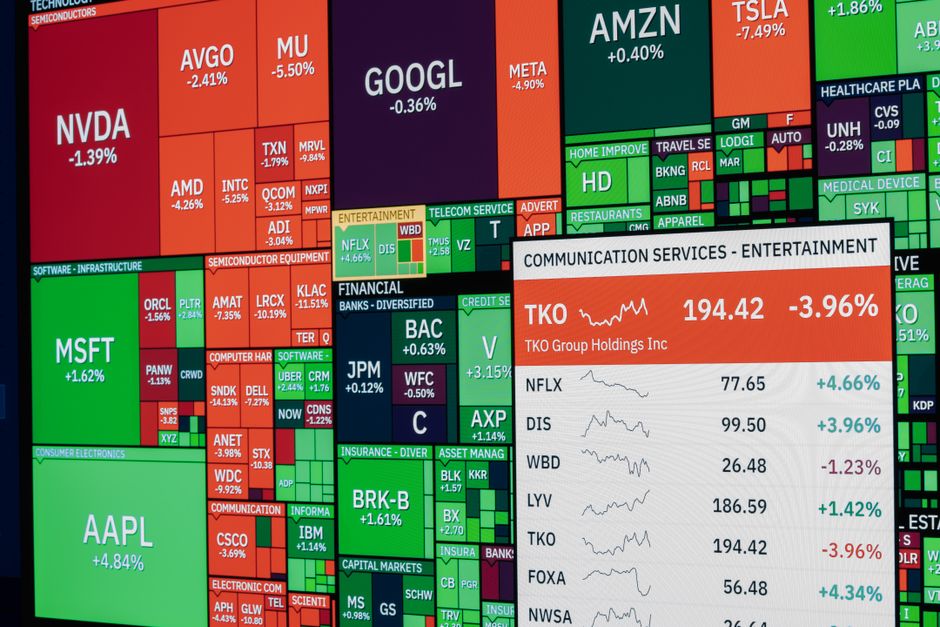
HSBC‘s chief multi-asset strategist has characterized the recent market disruption as predominantly driven by technical dynamics rather than substantive economic deterioration, offering a measured perspective on the forces reshaping global financial markets.
Speaking to Bloomberg Surveillance, Max Kettner noted that current market conditions reflect technical realities rather than alarming fundamental headwinds. “It is an incredibly technically-driven market,” Kettner observed, highlighting how price movements and trading patterns are dominating sentiment rather than underlying economic concerns or corporate performance issues.
Understanding the Technical Narrative
Kettner’s assessment suggests that recent market movements stem from algorithm-driven trading, portfolio rebalancing, and positioning adjustments rather than watershed economic developments. This characterization diverges from narratives emphasizing recession risks, geopolitical tensions, or structural economic challenges. Instead, the HSBC strategist points to more cyclical drivers that typically resolve through natural market mechanisms and time-based adjustments.
The strategist identified earnings performance and shifting perceptions around artificial intelligence as the primary substantive factors influencing market direction. Earnings remain a traditional anchor for equity valuations, while the AI narrative has evolved considerably from the euphoria that dominated markets during 2023 and early 2024. Kettner’s observation that concerns about artificial intelligence are easing suggests that excessive valuations built on speculative AI expectations may be normalizing.
Implications for Investor Strategy
The distinction between technical and fundamental drivers carries significant weight for portfolio management. If markets are indeed driven primarily by technical factors, investors may expect volatility to prove transitory rather than indicative of deteriorating economic conditions. This interpretation suggests that pullbacks could represent buying opportunities rather than warning signals of deeper market stress.
However, the technical-versus-fundamental debate also reflects broader uncertainty plaguing European and global markets. Central bank policies remain in transition across the eurozone, with interest rate trajectories uncertain. Corporate earnings seasons continue to test whether companies can maintain profitability amid persistent cost pressures and subdued consumer demand in key markets.
European Market Context
For European financial markets specifically, HSBC’s strategist perspective carries relevance as regional equities navigate their own volatility patterns. The continent’s banking sector, technology stocks, and cyclical industries remain sensitive to both technical positioning and genuine shifts in economic outlook. Kettner’s framing suggests that recent European market movements may lack the categorical warning signals that pure fundamental analysis might suggest, though vigilance remains warranted.
As markets continue their adjustment phase, the balance between technical forces and fundamental realities will likely determine whether current volatility resolves smoothly or escalates into more serious disruption. HSBC’s assessment provides a counterweight to more alarmist interpretations, though investors would be prudent to monitor whether technical factors eventually align with or diverge from emerging economic data and corporate performance metrics.