
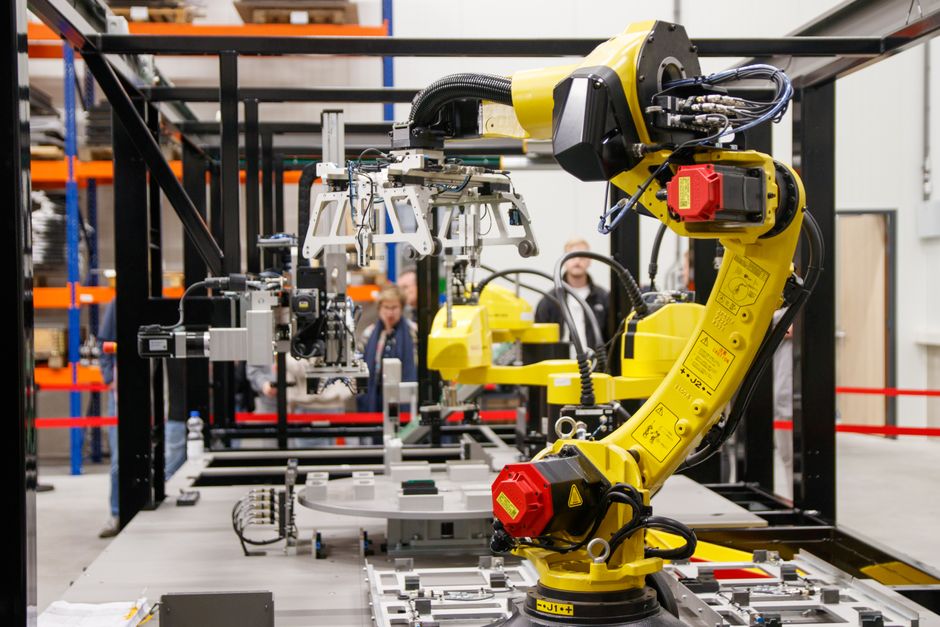
Gropyus, the construction technology startup operating in partnership with Germany’s major residential real estate operator Vonovia, is confronting an acute liquidity shortage that threatens its operational viability. The company, which has developed an automated manufacturing facility designed to produce prefabricated housing components at scale, now faces an uncertain financial future as current investors scramble to arrange emergency funding.
According to sources familiar with the matter, existing shareholders have initiated discussions regarding bridge financing to stabilize the company’s cash position. However, the funds being mobilized are insufficient to fully address the magnitude of Gropyus’s liquidity gap, raising serious questions about whether the company can sustain operations through this critical period.
Partnership Context and Business Model
Gropyus has positioned itself as a technological solution to Germany’s persistent housing shortage, leveraging robotics and industrial manufacturing principles to accelerate construction timelines and reduce costs. The collaboration with Vonovia, one of Germany’s largest residential property managers with hundreds of thousands of units across the country, represented a significant validation of the company’s approach and provided access to substantial potential demand.
The partnership was intended to demonstrate that serialized construction through automated facilities could address structural inefficiencies in Germany’s residential building sector. The robotic factory concept sought to transform housing production from project-based, labor-intensive processes into streamlined industrial operations capable of producing units more rapidly and at lower cost per unit.
Financial Distress and Investor Response
The emergence of liquidity pressures at Gropyus underscores the challenges facing even well-backed construction technology ventures in executing scaling strategies. The company’s cash requirements appear to have outpaced capital availability, forcing investors into a defensive posture rather than supporting growth initiatives.
The bridge financing arrangement under discussion represents an interim measure designed to prevent immediate operational collapse, yet market participants question whether such short-term injections address fundamental viability concerns. Without clarity on the precise quantum of the shortfall or the adequacy of proposed funding, uncertainty surrounding Gropyus’s medium-term prospects has intensified.
Broader Market Implications
Gropyus’s financial difficulty arrives during a period of broader retrenchment in German real estate and construction technology sectors. Rising interest rates, construction cost inflation, and softening residential property demand have compressed margins across the industry and increased pressure on venture-backed businesses lacking established revenue streams.
The situation reflects wider challenges facing European proptech and construction innovation ecosystems, where capital availability has contracted significantly from pandemic-era peaks. For stakeholders in Germany’s housing market, Gropyus’s distress signals that technological solutions alone cannot overcome macroeconomic headwinds affecting residential development sectors across the continent.