Swiss National Bank Holds Rates at Zero as Other Central Banks Tighten Policy
The Swiss National Bank held its policy interest rate at zero percent to prevent Swiss franc appreciation, contrasting with rate-hiking cycles at other central banks
The IMK (Institute for Macroeconomics and Business Cycle Research) has substantially reduced its economic growth forecasts for Germany for 2026 and 2027, citing the economic fallout from the Iran conflict and persisting oil market volatility as key drivers of the downward revision.
Bundesbank President Joachim Nagel expresses doubt about geopolitical de-escalation in the Middle East, warning that much can change in 60 days. His concerns relate to potential disruptions at the Strait of Hormuz and their inflationary implications for the Eurozone economy.
Bundesbank President Joachim Nagel warns that despite potential de-escalation in Middle East geopolitical tensions and possible reopening of the Strait of Hormuz shipping route, inflation risks remain and normalization will take several months.
Economiesuisse Chief Economist Rudolf Minsch warns that Switzerland’s potential population cap initiative could harm labor-intensive sectors and innovation-dependent industries that rely on foreign workers, including restaurants, construction, healthcare, scientific research, and product development.
Infineon Technologies AG is opening its largest single investment, a €5 billion semiconductor factory in Germany with support from European Union subsidies, as part of the EU’s push for semiconductor sovereignty and increased production capacity.
The European Central Bank’s monetary policy of raising interest rates to control inflation is allowing savers to benefit from improved conditions on savings accounts and fixed-term deposits, with rates reaching up to four percent
ABB CEO warns Europe faces mass unemployment risk without reforms and deregulation, citing energy shocks from Iran war as threat to EU competitiveness
France is undertaking a €110 billion investment program to build out data centre infrastructure to support AI development and technological ambitions under President Macron. However, investors caution that regulatory approval timelines and local community opposition present risks to the timeline and successful completion of the ambitious project.
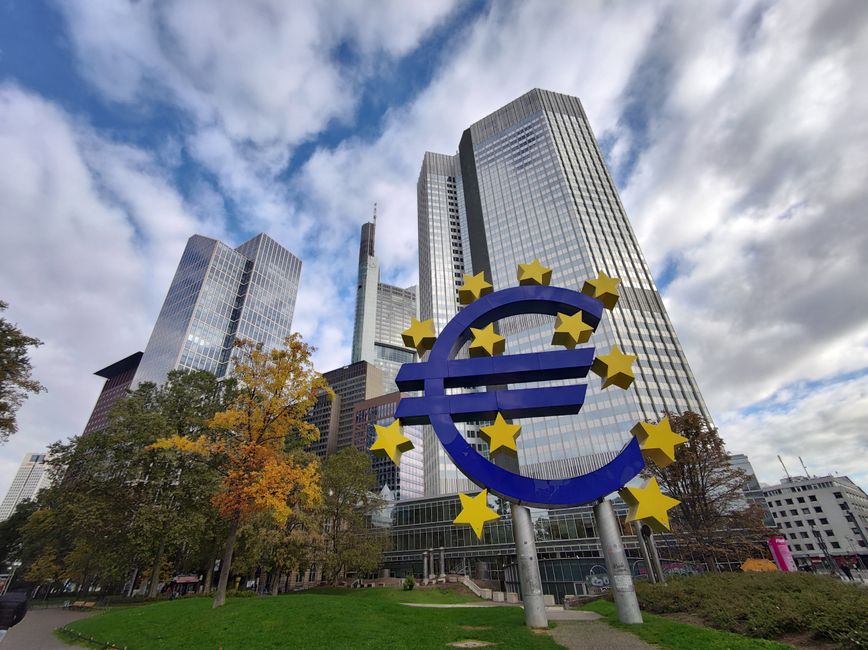
The European Central Bank is focusing on enhancing the euro’s significance in global financial markets as a response to political developments, particularly related to Trump. The bank identifies expansion opportunities for the European currency, though some proposed measures face criticism within Germany.