
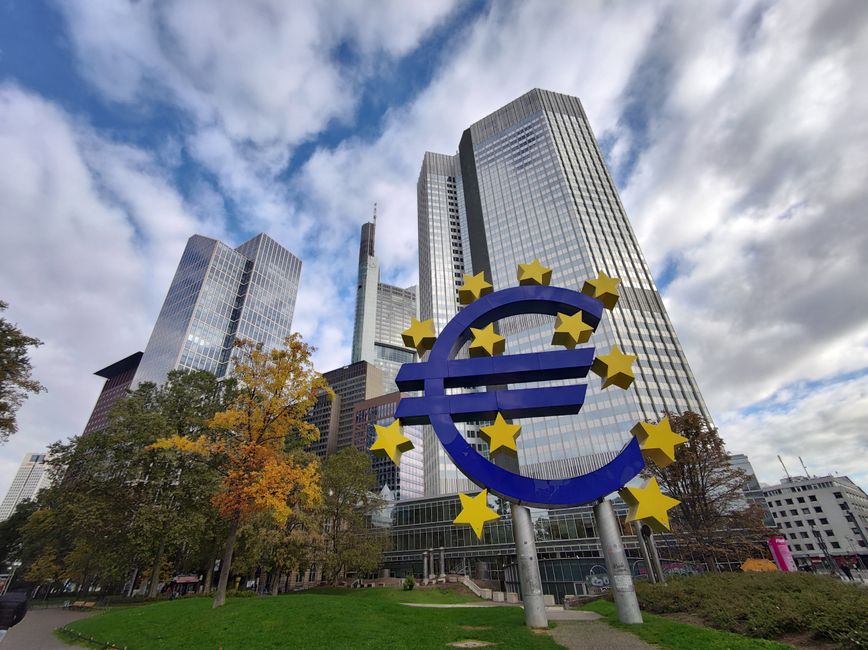
The European Central Bank has lifted its key interest rate to 2.5%, intensifying its efforts to combat elevated inflation while simultaneously cautioning that price pressures will likely persist well beyond current expectations due to ongoing Middle East tensions.
The rate increase reflects the ECB’s determination to address inflationary dynamics across the eurozone. However, the central bank’s forward guidance reveals deepening concern about structural factors undermining price stability. Rather than treating current inflation as a transitory phenomenon, the ECB has adopted a more pessimistic assessment of the inflation trajectory, particularly regarding energy and commodity markets vulnerable to geopolitical disruption.
Geopolitical Risks Reshape Inflation Outlook
Christine Lagarde, President of the European Central Bank, articulated the institution’s perspective on these headwinds during recent policy communications. According to Lagarde, the “price shock driven by Middle East conflict will persist well into 2027,” establishing a notably extended timeline for inflation normalisation compared to earlier central bank projections.
This assessment marks a significant recalibration of ECB thinking. The acknowledgement that geopolitical price shocks will remain consequential for nearly four more years suggests the central bank now views inflation management as a challenge extending well beyond standard cyclical pressures. Energy markets, in particular, remain sensitive to Middle East developments, with potential supply disruptions capable of translating rapidly into consumer and producer price increases across the eurozone.
Monetary Policy Implications
The 2.5% rate level positions the ECB’s deposit rate at a restrictive stance relative to recent historical norms, though debates continue regarding whether current settings sufficiently constrain economic activity. The decision to maintain or incrementally adjust rates will likely depend on incoming inflation data and developments in the Middle East, creating an unusual situation where geopolitical calendars directly influence European monetary policy.
The ECB’s extended inflation timeline complicates near-term policy decisions. If price pressures prove more stubborn than anticipated even at current rate levels, the central bank may face pressure to maintain restrictive conditions longer than markets have priced in. Conversely, should geopolitical tensions ease, the inflation trajectory could improve more rapidly, potentially creating room for rate reductions sooner than the 2027 horizon currently suggests.
Market Implications
The ECB’s cautious stance carries ramifications for eurozone financial markets and asset pricing. Fixed-income markets must now incorporate expectations of elevated rates persisting through multiple years, reshaping yield curves and refinancing conditions for governments and corporations. Banking sector profitability may benefit from wider net interest margins, though prolonged economic pressure from restrictive policy could ultimately weigh on credit demand and asset quality.
The central bank’s willingness to explicitly link monetary policy guidance to geopolitical risks underscores how traditional macroeconomic frameworks have been superseded by structural uncertainties. European policymakers now operate within an environment where Middle East developments command as much analytical attention as labour markets or wage dynamics when assessing inflation durability.