
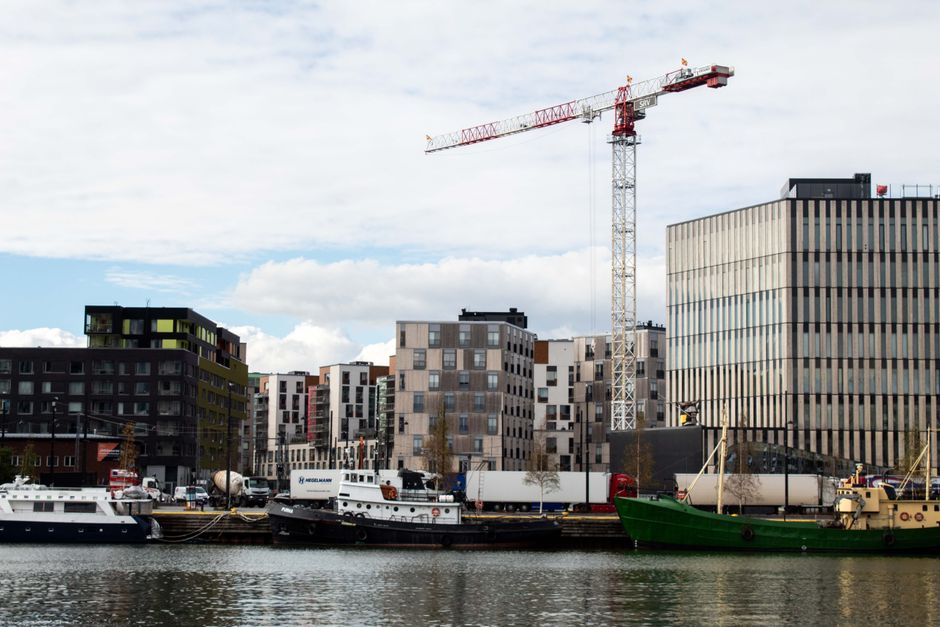
Germany’s ambitious attempt to address its acute housing shortage through substantial state funding has failed to generate the expected construction surge, prompting fresh pledges from federal leadership while industry stakeholders identify systemic obstacles as the primary constraint on residential development.
The German Federal Ministry of Housing, Urban Development and Building has channeled €60 billion in government subsidies into housing initiatives, yet new apartment construction remains considerably below policy targets. This disconnect between capital deployment and tangible results has sparked debate about whether funding mechanisms adequately address the underlying factors constraining Germany’s residential property market.
Verena Hubertz, Federal Minister for Housing, Urban Development and Building, announced a second construction acceleration initiative at Expo Real, Europe’s leading real estate trade fair. The renewed commitment reflects governmental determination to unlock residential development across the country, where housing demand substantially outpaces supply in major metropolitan areas and regional centers.
Industry Skepticism on Root Causes
However, construction industry representatives have offered a more complex diagnosis. Rather than attributing the construction slowdown primarily to capital constraints, market participants argue that deeper structural impediments prevent developers from translating available subsidies into completed housing units.
These obstacles reportedly include labor shortages within Germany’s construction sector, rising material costs that erode project economics, complex permitting procedures that extend project timelines, and land availability constraints in high-demand regions. Additionally, regulatory requirements for energy efficiency and sustainability compliance have increased development costs and complexity, potentially offsetting the benefit of government financial support.
The divergence between ministerial optimism and industry assessment underscores a critical gap in Germany’s housing policy framework. While subsidies address financing barriers, they may prove insufficient without parallel reforms addressing regulatory, logistical, and supply-side constraints that determine construction feasibility.
Broader Market Implications
Germany’s residential market challenge carries significance beyond national boundaries. As Europe’s largest economy grapples with housing affordability and construction deficits, policy effectiveness—or ineffectiveness—provides instructive lessons for other EU member states pursuing similar housing interventions.
The experience suggests that substantial public investment, while necessary, requires complementary structural reforms to achieve meaningful outcomes. Without concurrent measures to streamline permitting, address labor force constraints, and stabilize material supply chains, fiscal commitments risk inefficient capital allocation.
For financial markets, persistent German housing shortages maintain upward pressure on residential property valuations and rental rates, potentially affecting consumer spending patterns and inflation dynamics across the eurozone. Real estate investment vehicles tied to German residential assets remain sensitive to whether policy interventions successfully accelerate construction activity.
The outcome of Hubertz’s renewed construction initiative will likely influence how policymakers across the EU calibrate future housing investments, determining whether forthcoming fiscal commitments prioritize demand-side subsidies, supply-side structural reforms, or integrated approaches addressing multiple constraint categories simultaneously.