
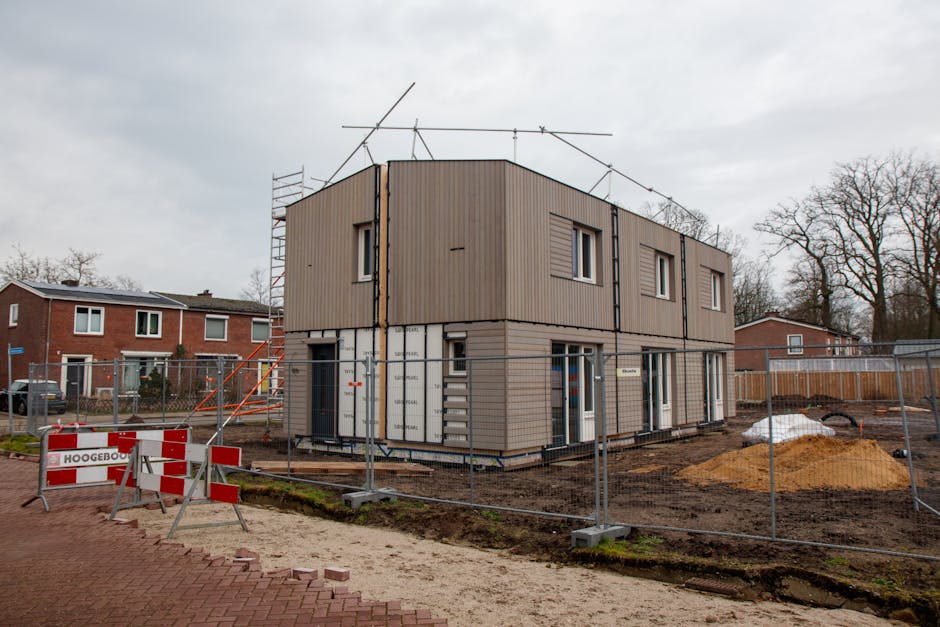
KfW (Kreditanstalt für Wiederaufbau), Germany’s state-owned development bank, has announced the return of its KfW-55 energy efficiency funding program in 2026, marking a significant policy shift in the nation’s approach to sustainable construction financing. The program will target selected new construction projects with an increased funding pool, representing renewed government commitment to promoting environmentally efficient building standards.
The KfW-55 Building Standard, administered under German Federal Government regulation, establishes stringent requirements for residential construction projects seeking access to concessional financing. Buildings meeting this standard must achieve exceptional energy performance, consuming only 55 percent of the energy typically required by baseline reference buildings under current German building regulations. The program’s reintroduction follows a period during which funding availability for new construction projects had become constrained due to budgetary limitations.
Program Revival and Eligibility Framework
The renewed funding initiative applies exclusively to qualifying new construction projects that meet specified technical and environmental criteria. Applicants must demonstrate that their residential construction projects conform to the KfW-55 energy efficiency standards, which encompass comprehensive building envelope specifications, heating systems efficiency, renewable energy integration, and overall thermal performance metrics. The German Federal Government has designated this program as a key mechanism for advancing decarbonization objectives within the residential construction sector.
Prospective applicants are advised to submit funding applications expeditiously, as the expanded budget pool is expected to attract substantial demand from developers and property owners planning projects in 2026. The accelerated timeline for submissions reflects the anticipated competition for funding allocations under the revived scheme.
Market Context and Broader Implications
The restoration of KfW-55 funding represents a deliberate policy decision by German authorities to stimulate investment in energy-efficient housing construction while simultaneously advancing the country’s climate neutrality targets. The program operates as a critical instrument within Germany’s broader framework of using development finance to drive behavioral change and capital allocation toward sustainable real estate development.
For European financial markets and regulatory landscape more broadly, Germany’s reinvigoration of targeted construction financing programs reflects ongoing commitment to leveraging state development institutions as policy implementation vehicles. Other European Union member states monitor such initiatives closely, as they demonstrate integration of climate objectives with fiscal policy through dedicated funding mechanisms. The KfW-55 program renewal illustrates how development banks continue evolving their product offerings to align with evolving regulatory requirements and sustainability mandates emanating from both national governments and European Union institutions.
The program’s expansion signals confidence in continued demand for premium energy-efficient residential properties and validates the long-term viability of sustainable construction as a distinct asset class within European real estate markets. As EU-wide building efficiency directives continue strengthening, analogous programs across member states face comparable pressures to allocate capital toward achieving regulatory compliance and climate objectives through residential construction financing.